Bracing & Cabling
Extending trees' lives with supplemental support
Tree safety and preservation
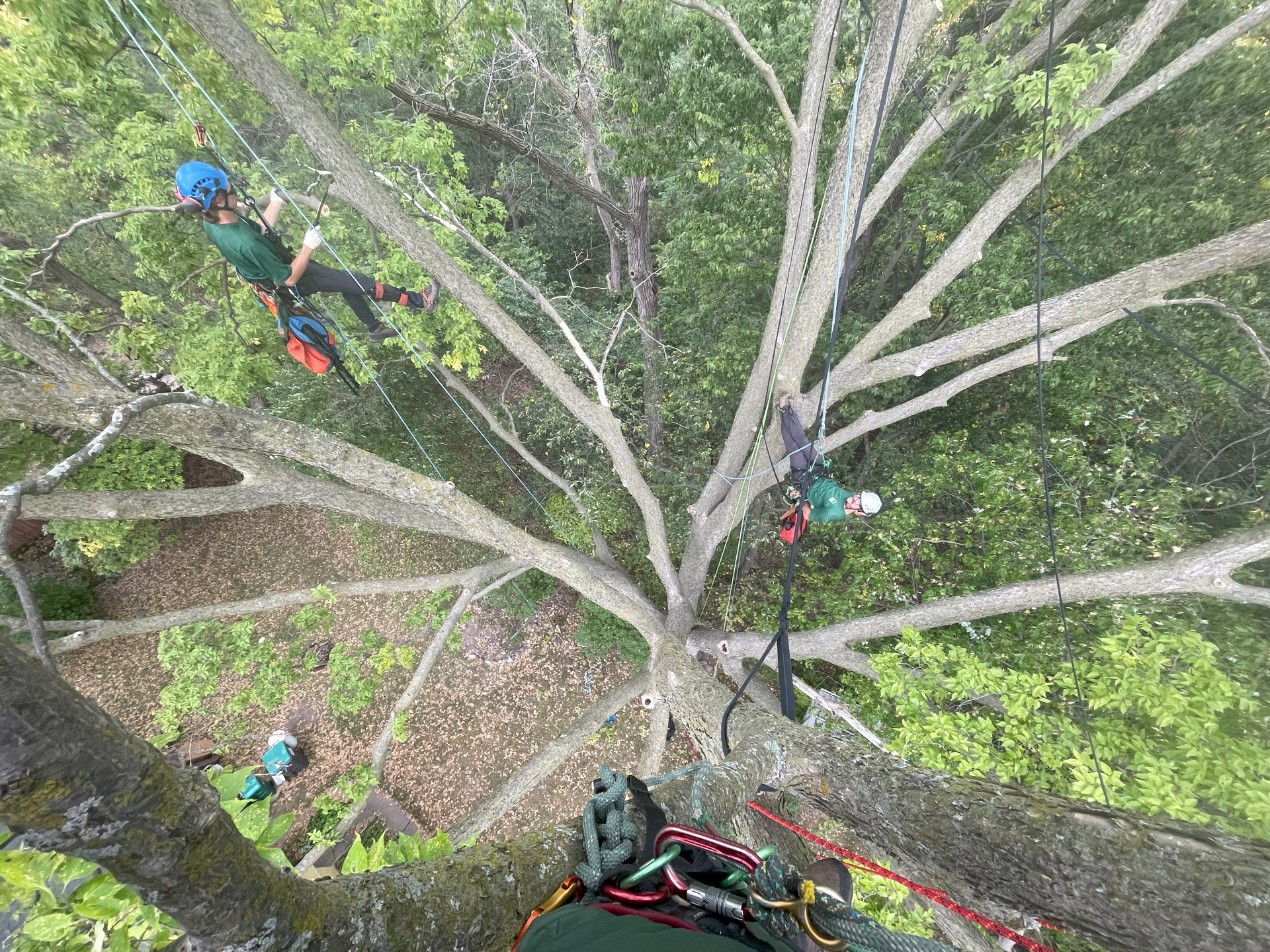
Tree braces are supplemental support systems used to correct or mitigate problems in trees with poor form or other defects. Depending on the tree, bracing systems can involve one to many dynamic (rope) and/or static (steel) supports.
Our practice
Tree Health vs. Mechanical Structure
Tree health may be looked at from two perspectives: health and vigor, and structural stability. A healthy tree may have significant structural problems that could lead to failure, and a declining tree may be structurally sound for years to come. While health and structure can affect each other, this can be a useful way to think of tree management.
As part of our initial meeting and consultation, we'll try to find the best management plan for you and your trees, which could include a supplemental support system. We'll also discuss if the cabling is worth the time and money, given possible risks, trees' health, and your budget and plans for the future.
Common Cabling Scenarios:
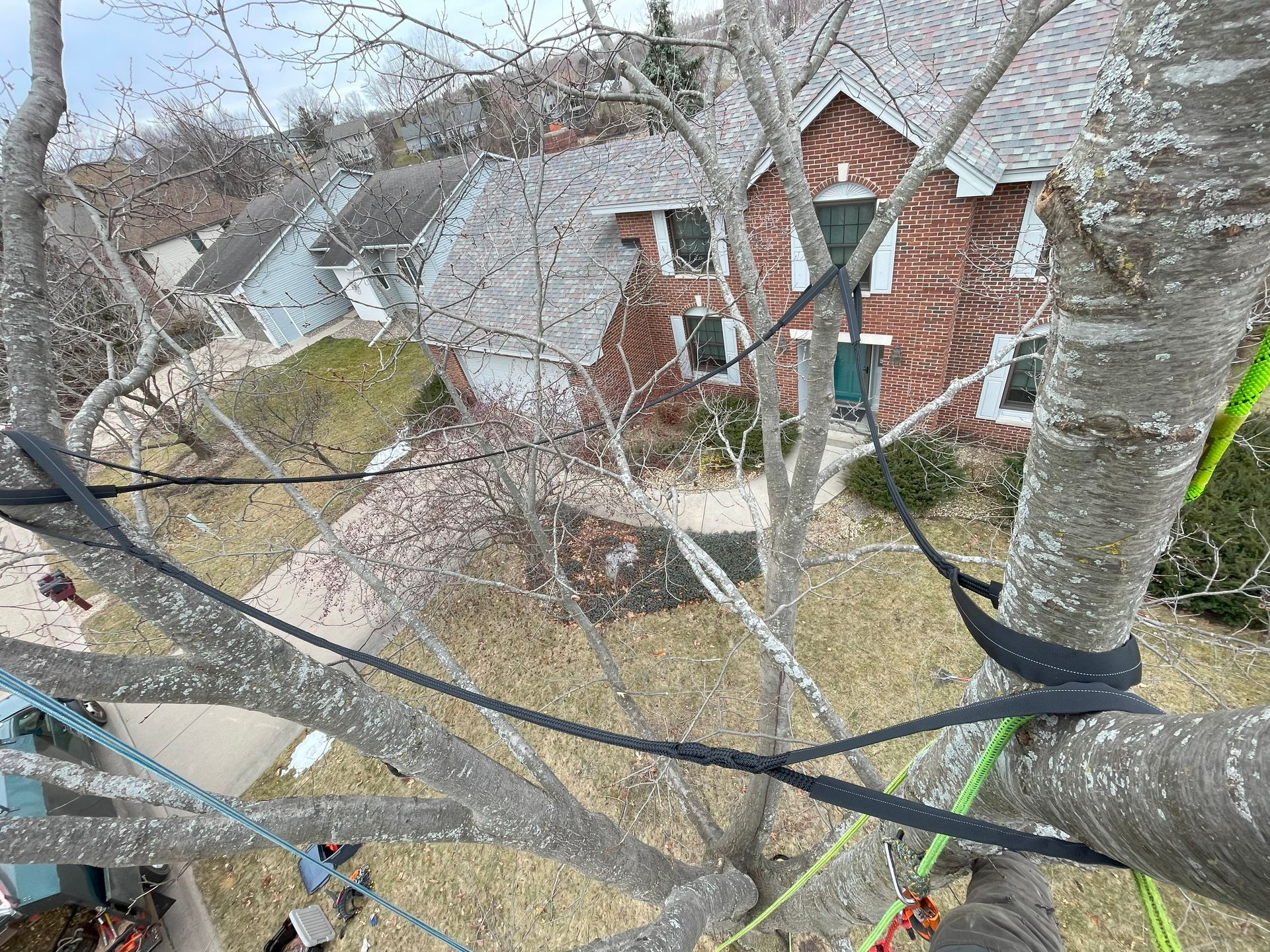
Common defects include weak branch attachments with/ included bark, co-dominant stems or leads, over-extended and "lion's-tailed" branches, past poor pruning practices like over-thinning, and significant decay. A system could be a simple, single cable to support one defect, or a more complicated system to supplement the entire canopy. A plan and rough design will be made from the ground, and the final decision on exact placement and orientation will be made during installation in the canopy. Reduction pruning often is recommended at the same time.
Synthetic Cabling/Dynamic Bracing Systems:
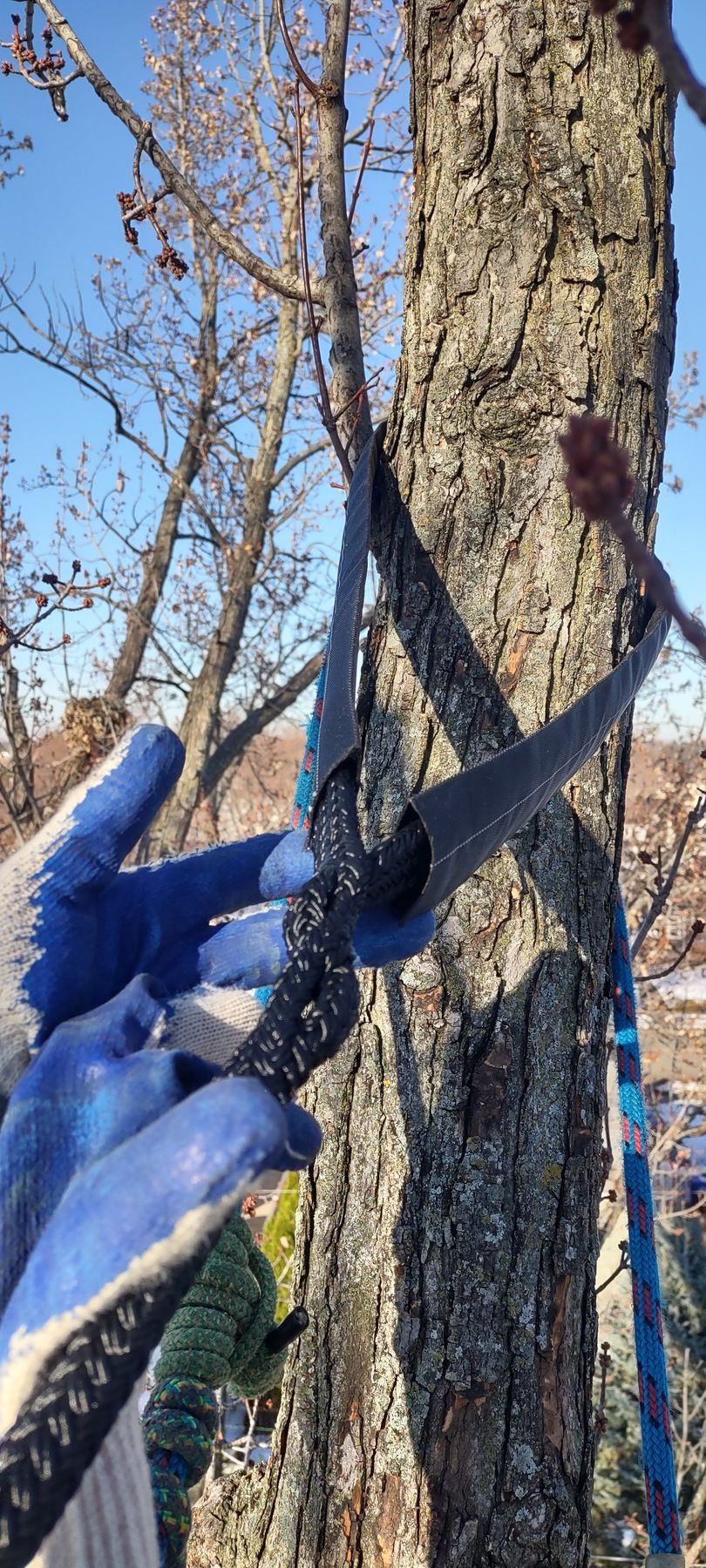
For most trees we cable these days, dynamic braces are the best option. These systems are made of a rope material manufactured for this purpose. They are spliced around branch unions and left with some amount of slack in the system. This is both non-invasive, no drilling into large branches, and allows the tree to continue to grow and support itself during normal weather conditions. During heavy winds or snow, the cables reduce peak loads on potential weak points in the tree. By allowing normal crown movement, dynamic bracing preserves the strength of the trunk or limbs involved, promoting long-term tree health. These systems generally last for at least ten years. (Synthetic/dynamic cabling, dynamic bracing terms are all used in the industry to refer to these systems/products.)
Northern Arborists were some of the first in our area to adopt dynamic cabling systems and have been installing them for decades.
Static Bracing/Cabling Systems:
In some cases, the traditional static, steel cabling systems are still the best solution to extend the life of a large, mature tree. Steel cables are installed into holes drilled into larger diameter wood, usually under some tension to support part of a tree. As these do not allow for continued natural movement, the tree will begin to permanently depend on the steel system for support. These are more commonly used in trees with large, active cracks where constant support is necessary.
Bracing rods are also an additional support option used in specific scenarios.
Updated July 2026
Dan Petters
ISA# MN-4878A
Let's Talk Tree Bracing & Cabling!
Thinking about the safety and structure of trees around your home or property? Give us a call or use the contact form to set up an initial meeting.